
Gum Disease Treatment Carrollton
Protecting Your Gums and Overall Health
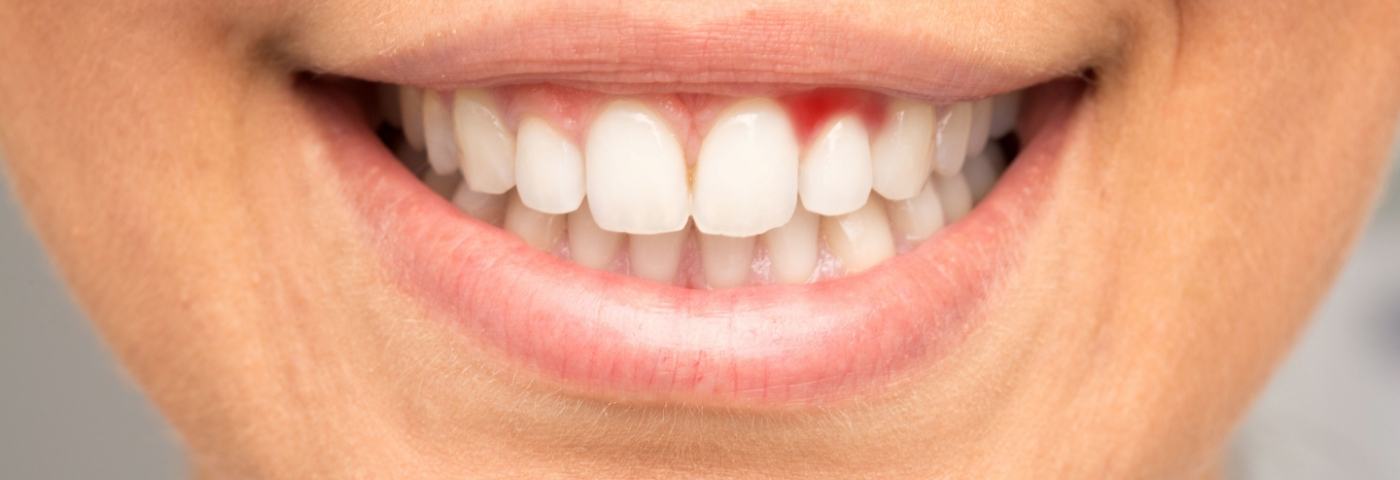
If you’ve noticed lately that your gums look red, inflamed, and are even bleeding when you brush or floss your teeth, you’re most likely experiencing the initial stages of gum disease. This common dental problem is something we see almost every day. Millions of Americans battle it, many of whom never seek treatment or realize they have it. It’s important to understand the signs and symptoms associated with gum disease to ensure you get the help you need to maintain good oral health. If you’re concerned about your gums and want to ask a dental professional in Carrollton about gum disease treatment, contact our office to schedule an appointment today!
Why Choose DD Family Dentistry of Carrollton for Gum Disease Treatment?
- Thorough Periodontal Screenings with a Trusted Hygienist
- In-Depth Scaling & Root Planing for Improved Oral Health
- State-of-the-Art Laser Dentistry Available
Common Signs of Gum Disease
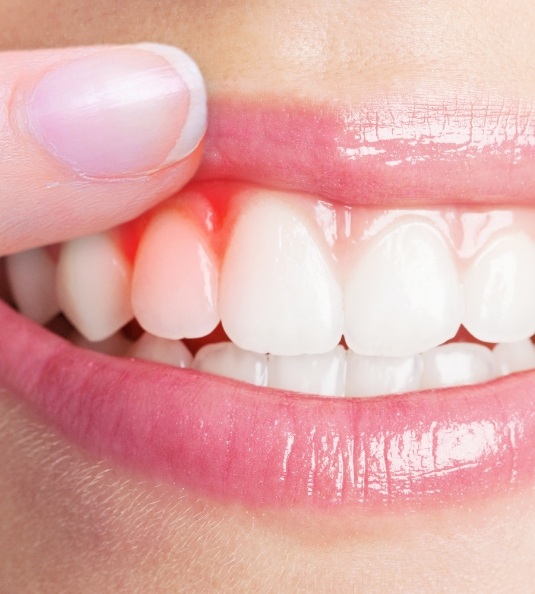
Dr. Durga has a trained eye when it comes to looking for things like tooth decay and gum disease. When you do not pick up on dangerous or concerning signs, you can bet Dr. Durga will. If your six-month visit to the dentist's office isn’t for a while, you should be cognizant of the signs associated with gum disease. If you begin to notice any of the following, make sure to call us.
- Red, tender, and swollen gums
- Gums that bleed while brushing, flossing, or eating hard foods
- Receding gums that make your teeth appear longer
- Loose teeth
- Pus developing between your gums and teeth
- Chronic bad breath
- Oral sores that do not heal
What to Expect During a Periodontal Screening

During your appointment with Dr. Durga, you will have what is known as a periodontal screening. This allows us to perform a brief examination of your gums and the areas around your teeth. What you can expect to happen is one of our dental hygienists will use a special tool to measure your gum recession or pockets. The scale is 0-4 with “0” being the best and “4” signaling an additional examination is needed.
Once our hygienist has finished charting your gum pockets, they will determine if you need periodontal therapy, which is also known as gum disease therapy.
If gum disease is caught in its early stages (gingivitis), it can actually be reversed. How so? Through the use of good oral hygiene habits practiced at home and regular dental cleanings, you can turn back the clock on your gum health.
Scaling & Root Planing
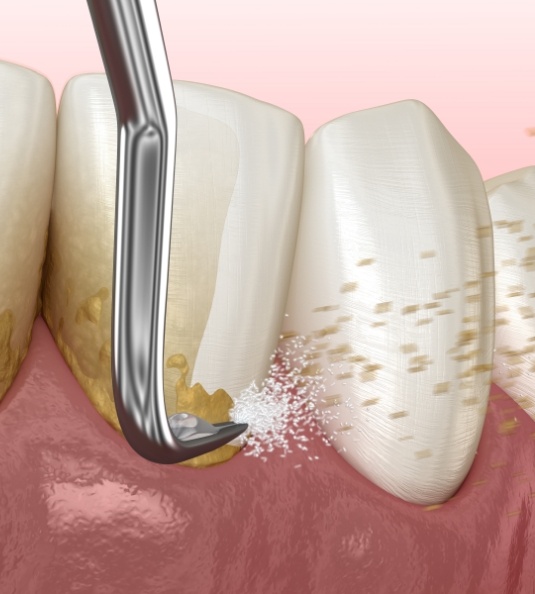
If it is determined that you do need periodontal therapy, you will most likely have what is called a scaling and root planing procedure. Scaling involves removing the plaque and bacteria living above and below the gumline, while root planing smooths out periodontal pockets to prevent reinfection.
Thanks to our soft tissue laser, this treatment is not usually painful. That said, we can offer sedation to help keep you calm and comfortable during your visit. In addition, an over-the-counter pain reliever can help alleviate any soreness once you are home.
Do I Need Scaling & Root Planing?

Generally speaking, only patients with advanced gum disease need scaling and root planing. This treatment is recommended when harmful bacteria have traveled deep inside the gum tissue, where a toothbrush and floss can’t reach.
At this stage, the bacteria have damaged the gums to the point where the tissue starts to pull away from the tooth and dental roots. This causes small pockets of air to form (otherwise known as “periodontal pockets”). Bacteria can easily hide in these pockets, making it harder to recover from gum disease, but a scaling and root planing treatment can address this problem.
The Process of Scaling & Root Planing
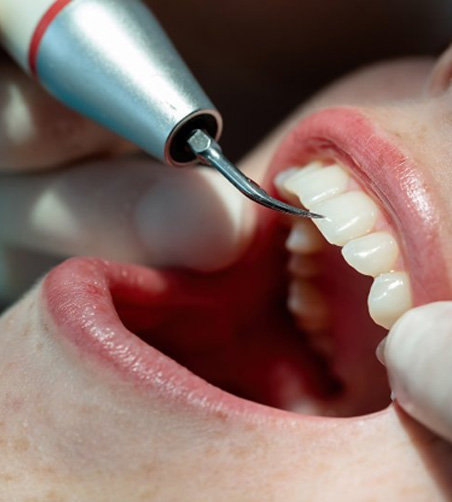
First, your dentist will perform the scaling portion of your treatment. Using specialized dental instruments, they’ll clean the bacteria, plaque, and tartar from the surface of your teeth and from underneath your gumline.
Once that’s done, your dentist will start root planing. They’ll gently massage your gums, encouraging the tissue to reattach to the tooth and dental roots. This will also close periodontal pockets in the process, and help you avoid future reinfection.
Aftercare Tips for Scaling & Root Planing

Since your mouth will be numb for a few hours after scaling and root planing, we recommend waiting to eat anything solid until after the numbness wears off. Otherwise, you could accidentally bite down on your inner cheek or tongue and cause irritation.
Some soreness is to be expected, but you should be able to address it with over-the-counter pain relievers. If the discomfort becomes severe or lasts for more than a week or two, get in touch with our team so we can help.
Finally, continue to slowly and gently brush twice daily and floss once per day. Oral hygiene will be crucial for helping you to avoid reinfection.
Laser Periodontal Treatment
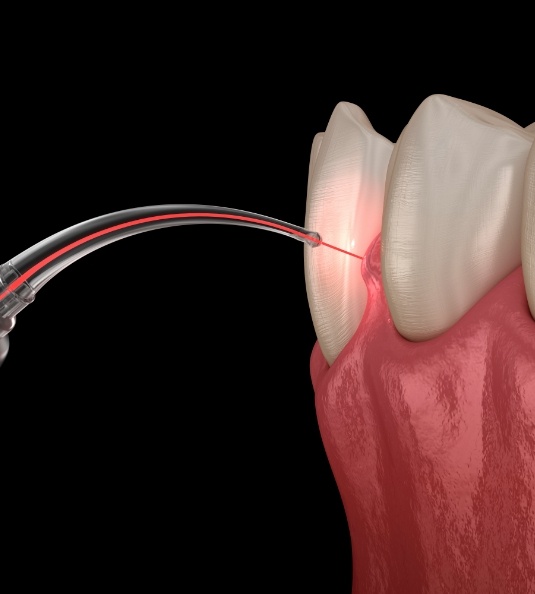
Bacteria are known to burrow into crevices that cannot be reached using other specialized instruments. This is why we use laser periodontal treatment to target infected areas. By performing this method of care, we can precisely target unhealthy gum tissue while leaving healthy spaces alone. The soft tissue laser that is used cauterizes the tissue so that it reduces bleeding and swelling, allowing for quicker healing.
How Laser Periodontal Treatment Works
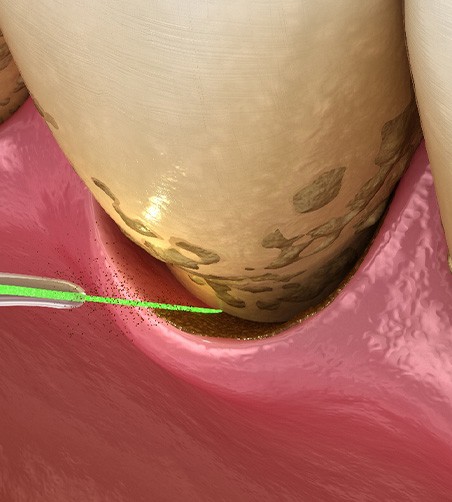
Laser periodontal treatment allows us to remove damaged tissue and bacteria from the pockets around the teeth. The laser only targets diseased gum tissue and sterilizes the area, reducing bacteria levels and promoting healing. Additionally, the laser can be used to access and remove tartar buildup beneath the gumline, helping the healthy gum tissue to attach to the teeth.
The Benefits of Laser Periodontal Treatment
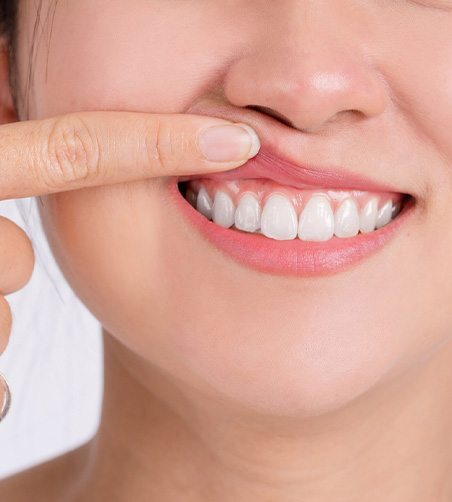
Laser periodontal treatment offers a variety of benefits. Here are some of the most prominent ones.
- Minimally Invasive: Dental lasers are very precise and only target diseased tissue, leaving the healthy tissue untouched. This means minimal discomfort, reduced bleeding, and less swelling during and after the procedure.
- Quick Recovery: Since laser periodontal treatment is minimally invasive, the recovery time so much quicker than traditional gum surgery. You should be able to return to your normal schedule after just a couple of days.
- Lower Risk of Infection: The dental laser sterilizes the area as it goes, reducing the risk of infection.
- Effective: Laser periodontal treatment is highly effective at removing infected tissue and bacteria from the pockets around the teeth. This results in improved gum health and reduced risk of complications.
Aftercare Tips for Laser Periodontal Treatment

Your gums will need to take some time to heal following your procedure. Here are some steps you should take following laser periodontal treatment.
- Eat soft, nutritious foods
- Avoid hot and spicy food
- Avoid hard, crunchy foods
- Brush your teeth twice a day
- Floss between your teeth daily
- Rinse your mouth with antimicrobial mouthwash
Antibiotic Treatment
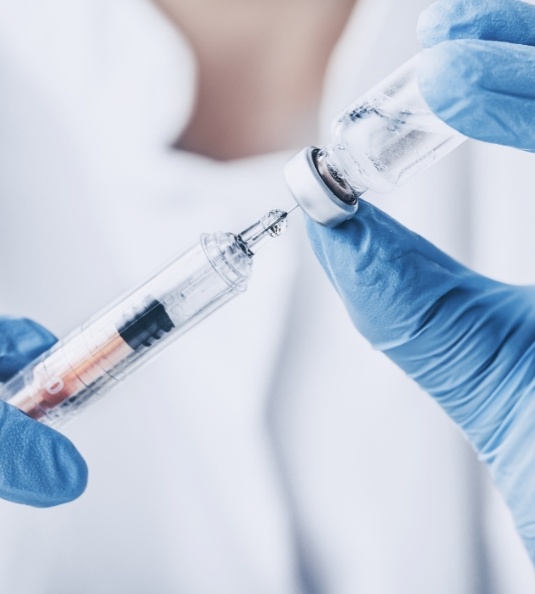
Commonly used in combination with scaling and root planing, and in some cases, laser treatment, Dr. Durga can apply antibiotics to gum pockets to encourage faster healing and the elimination of bad bacteria. Once applied, the medicine disperses over several weeks, reaching into the smallest areas, effectively eradicating harmful particles that can cause reinfection.